


Florida is famous for many things: hurricanes, alligators, and even the occasional “Florida Man” headline. But one of the state’s biggest risks is hidden underground: sinkholes.
If you own property in Florida, you may be wondering how sinkholes affect your insurance coverage. Does your homeowners policy cover them? Is catastrophic ground cover collapse the same thing as sinkhole insurance?
In this article, we’ll compare sinkhole coverage vs. catastrophic ground cover collapse, explain the differences, and help you understand what your policy may and may not cover.
What Are Sinkholes?
If you’ve just moved to Florida, you might not be familiar with these geological disasters. They’re simply another part of living in the Sunshine State.
A sinkhole is a depression in the ground caused by the collapse of the underlying structure. Florida sits on limestone, a type of porous rock that can wear away as water moves through it. When water seeps into the ground, which happens often during our many summer thunderstorms, the slightly acidic water begins to dissolve the limestone.
As more cracks develop, the surface area of the limestone increases and more water sweeps in to dissolve it. After enough time passes, the remaining limestone may not be strong enough to support the ground above it, causing the surface to collapse.
This is only one way sinkholes can form. Drought, drilling for wells, excessive withdrawal of groundwater, and other factors can make sinkhole activity more likely.
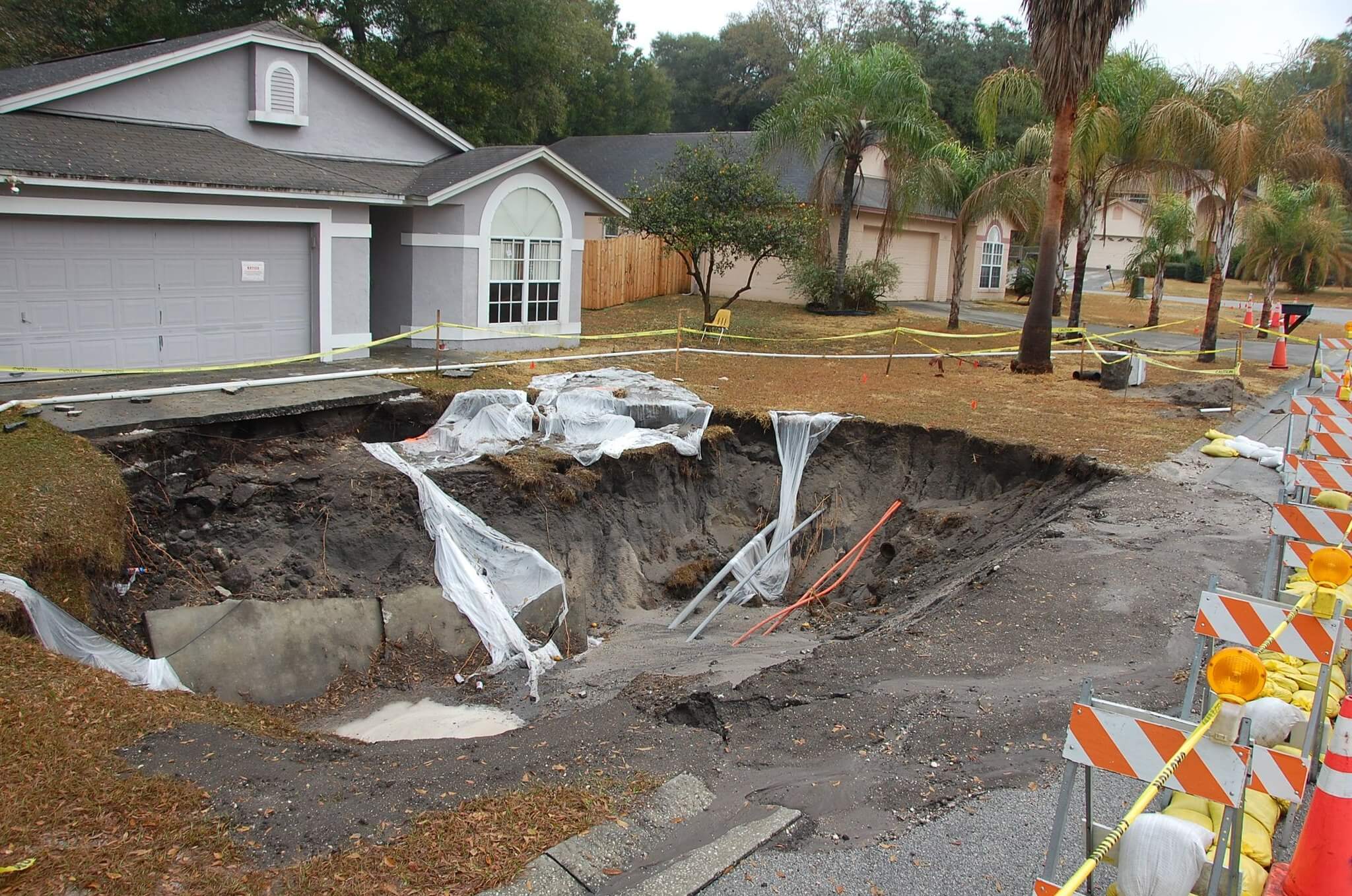
Some sinkholes are small enough to damage a shed or playhouse. Others are large enough to swallow entire buildings. They can happen gradually or suddenly, and repairing the damage can cost hundreds of thousands of dollars.
Sinkhole Warning Signs
Unfortunately, there isn’t much you can do to prevent a sinkhole from opening up on your property. However, you can watch for warning signs so you can respond before the damage becomes more serious.
Some warning signs of a developing sinkhole include:
- Cracks or fissures in the foundation
- Doors and windows that no longer close properly
- Drooping vegetation
- Cracks, pools, or holes in the ground
If you notice any of these red flags on your property, contact a specialist as soon as possible. Depending on what is happening beneath your home, certain steps may help reduce further damage and keep your family safe.
Does My Homeowners Insurance Policy Cover Sinkholes?
With so much at stake, you may be wondering whether sinkhole damage falls under your insurance coverage.
The short answer is: sometimes.
Since 2007, all home insurance policies in Florida have been required to include catastrophic ground cover collapse coverage. This may include some sinkhole-related losses, but it does not cover every type of sinkhole damage. To get broader protection, you may need to purchase a sinkhole insurance rider at an additional cost.
Sinkhole Coverage vs. Catastrophic Ground Cover Collapse
The two terms may sound similar, but there are important differences between sinkhole coverage and catastrophic ground cover collapse coverage.
As with many insurance policy issues, fraud and abuse have led insurance companies to make a clear distinction between standard catastrophic ground cover collapse coverage and broader sinkhole insurance.
Let’s look at the major differences between the two.
Catastrophic Ground Cover Collapse
Catastrophic ground cover collapse coverage is included in Florida homeowners insurance policies.
However, your claim must meet four requirements before your insurance company will reimburse you for the loss:
- The abrupt collapse of the ground cover
- A depression in the ground cover that is clearly visible to the naked eye
- Structural damage to the insured building, including the foundation
- The insured structure being condemned and ordered to be vacated by the governmental agency authorized by law to issue that order
Again, all four of these conditions must be met for the loss to be considered catastrophic ground cover collapse. If only some of these conditions are met, you would likely need separate sinkhole insurance for coverage to apply.
Sinkhole Insurance
A sinkhole insurance policy covers structural damage to the insured building, including the foundation, caused by sinkhole activity. A sinkhole is generally defined as the settlement or systematic weakening of the earth caused by movement of soil, sediment, or rock into underground voids created by water dissolving limestone or similar rock.
Because sinkhole policies cover a broader range of claims, they can be much harder to find. Florida sees enough sinkhole activity that many insurers do not offer this type of coverage at all. When sinkhole insurance riders are available, they often come with deductibles of 10% or more of the insured home’s value.
This increased deductible does not apply to catastrophic ground cover collapse coverage.

Do I Need Both?
When comparing sinkhole coverage vs. catastrophic ground cover collapse, the difference comes down to how broad the protection is.
Sinkhole insurance is much broader than catastrophic ground cover collapse coverage. It may cover damage that does not meet the strict requirements for catastrophic ground cover collapse. However, because the coverage is broader, it can also be more expensive and harder to obtain.
Catastrophic ground cover collapse coverage does not cover every sinkhole loss, but it can provide protection in many severe situations where a home is directly affected by a major collapse.
The best place to start is by reviewing your homeowners insurance policy so you understand what’s covered and where there may be gaps.
Insurance policies aren’t always easy to read. If you’re unsure what your policy covers, talk with your insurance agent or carrier. They can explain your coverage and help you determine whether additional sinkhole protection makes sense for your situation.
What About Commercial Property Insurance?
Sinkholes aren’t just a concern for homeowners. They can also create serious risks for commercial property owners and business operators throughout Florida.
Damage to an office building, retail center, warehouse, or other commercial property can interrupt business operations, create safety concerns, and lead to expensive repairs. Depending on the extent of the damage, businesses may also face temporary closures, lost income, or costly structural remediation.
Commercial property policies do not all handle sinkhole losses the same way. Coverage depends on the policy language, endorsements, and the type of loss involved. Some businesses may have limited protection for catastrophic ground collapse, while broader sinkhole coverage may require additional endorsements or specialized coverage.
If you own commercial property or operate a business in an area with known sinkhole activity, it’s worth reviewing your insurance policy with your agent. Understanding your coverage before a loss occurs can help you avoid unexpected gaps and make sure your property is properly protected.
Conclusion
The threat of sinkholes can be frightening. The good news is that they are relatively rare, and many reported sinkholes occur in Hernando, Pasco, Hillsborough, and Pinellas counties. Here in Central Florida, alligators and hurricanes are often a bigger threat to personal property.
For additional peace of mind, consider checking your address against the Florida Department of Environmental Protection’s Subsidence Incident Reports Map to see sinkholes that have occurred near you. If you live in an area with high sinkhole activity, it may be worth looking into additional sinkhole insurance.
And if you have questions about auto insurance, life insurance, renters insurance, commercial property insurance, or home insurance in general, contact our offices to learn more. With more than 30 years of experience in the Orlando insurance market, we have the knowledge and experience to assist you.
We can’t wait to meet you!







Comment (1)
Paul William Caron
April 8, 2024Great information to inform the general public that want to move to Florida and the existing ones that are receiving miss information. I enjoy knowing people with actual and factual information to better the general public.
Thank you.